

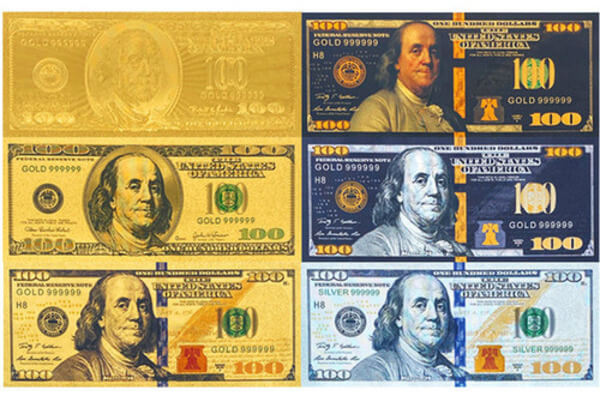
Los billetes de 100 dólares de color dorado son llamativos, pero a menudo crean confusión sobre su valor real. ¿Son inversiones valiosas o souvenirs decorativos? He aquí una mirada objetiva a lo que realmente valen.
Mayoría billetes de 100$ bañados en oro1 valen sólo unos pocos dólares. Su valor reside en la novedad o la coleccionabilidad, no en el contenido de oro. Las ediciones limitadas y las versiones de alta gama pueden valer más según la artesanía, la rareza y las licencias.
El término “billete de oro” incluye una amplia variedad de artículos, desde recuerdos turísticos económicos hasta artículos de colección personalizados de edición limitada hechos para clientes de alto nivel. Un billete novedoso de 10 dólares producido en masa difiere significativamente de un objeto de colección elaborado con técnicas avanzadas y materiales de primera calidad. El valor depende de los materiales, la calidad de la producción y los derechos de licencia.
La mayoría de estos billetes no están hechos de oro macizo. En cambio, suelen presentar una base de metal (como latón o plástico) con una fina capa de lámina o revestimiento de color dorado. El valor real varía según cómo y por qué se emitió la factura.
Tipos de billetes de oro de 100 dólares
1. Billetes novedosos del mercado masivo
Son comunes y se venden a través de tiendas online y tiendas de regalos. A menudo están hechos de plástico o metales básicos con un contenido mínimo de oro. Estos artículos normalmente se venden entre $5 y $20 debido a su atractivo novedoso.
2. Billetes coleccionables de edición limitada
Producidos en pequeños lotes con números de serie y diseños con licencia, estos artículos atraen a los coleccionistas. Pueden incluir micrograbados u elementos holográficos. Dependiendo de la marca o la historia asociada a ellos, pueden oscilar entre 50 dólares y varios cientos de dólares.
3. Conmemorativo de alta gama & Facturas de regalo corporativas
Estos billetes cuentan con resolución real de 24K. recubrimiento de oro2 con un espesor de 3 micras o más. Su valor (a veces cientos o miles de dólares) proviene de la artesanía, la autenticidad y la presentación, no sólo del material.
¿Valen los billetes de oro de 100 dólares su peso en oro?
No. El contenido de oro en la mayoría de los billetes de 100 dólares chapados es mínimo y tiene poco valor material. El metal base constituye casi todo el peso del billete.
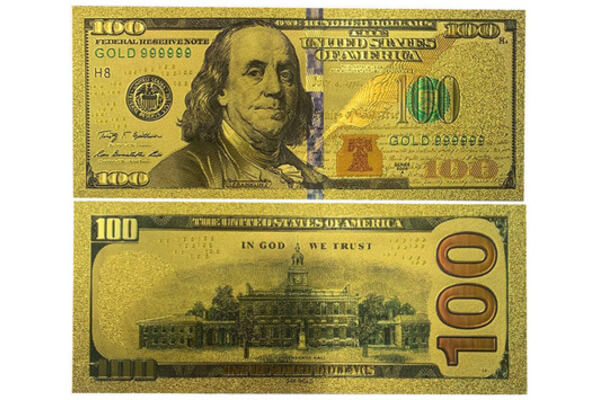
Entendiendo el baño de oro
El baño de oro es extremadamente fino, normalmente menos de 0,5 micrones. Un billete de 30 gramos con un baño de 0,5 micras contiene sólo unos pocos centavos de oro. El valor radica en su diseño y aspectos coleccionables, no en el metal.
Tipos de acabado dorado
- Chapado en oro/capas de oro.: Oro aplicado electroquímicamente sobre un metal base.
- Lámina de oro / revestida: Una fina lámina unida de lámina de oro, más gruesa que el enchapado pero que sigue siendo un tratamiento de superficie.
- Oro macizo: Todo el artículo está hecho de aleación de oro. Raro y caro para artículos de este tamaño.
Incluso en artículos de alta calidad, más del 99,9% del valor del material a menudo proviene del metal base y del proceso de fabricación, no de la capa de oro.
¿De dónde viene el valor real?
El valor de un objeto de colección depende más de su historia y construcción que de sus materiales. Estos son los impulsores de valor clave:
| Factor de valor | Descripción | Por qué es importante |
|---|---|---|
| Propiedad intelectual (PI) | Derechos de licencia de marcas, películas o personajes populares. | Agrega valor emocional y cultural para los fanáticos. |
| Artesanía & Detalle | Grabado, precisión de color y acabado de alta gama. | Aumenta el valor percibido y la calidad. |
| Estado de edición limitada | Tiradas de producción numeradas con pequeñas cantidades. | Crea exclusividad e impulsa el interés de los coleccionistas. |
| Características de seguridad | Hologramas, microtexto o tecnología avanzada antifalsificación. | Confirma la autenticidad y añade credibilidad. |
| Certificado de autenticidad | Documentación verificada del fabricante. | Respalda el valor de reventa y la confianza del comprador. |
Cómo saber si un billete de oro de 100 dólares es real
comprobar si hay un Certificado de autenticidad3 y evaluar la artesanía. Las piezas auténticas tienen acabados detallados y características claras. Las imitaciones baratas suelen parecer planas o borrosas.
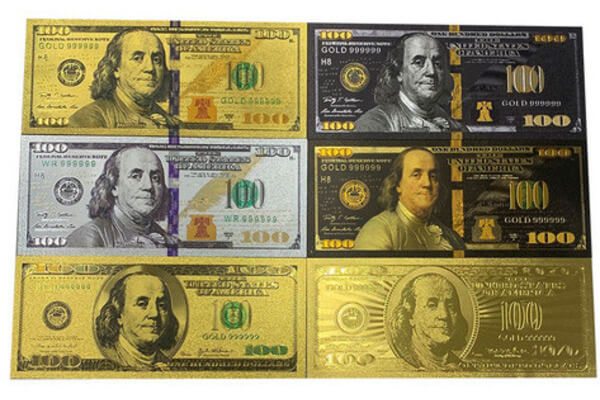
Busque la documentación adecuada
Un billete de colección real debe incluir un Certificado de Autenticidad (COA) con:
- El nombre del emisor (fabricante o titular de la propiedad intelectual)
- Detalles del material (p. ej., “latón chapado en oro de 24 quilates”)
- Dimensiones y peso
- Un número de serie único que coincide con la factura.
Banderas rojas:
- COA genérico o faltante
- No hay información específica sobre materiales u origen.
Algunos productos premium ahora incluyen verificación blockchain para seguimiento de autenticidad.
Examinar las cualidades físicas
| Característica | Coleccionable de alta calidad | Recuerdo de baja calidad |
|---|---|---|
| Grabado | Líneas profundas y nítidas con textura táctil. | Impresión plana o borrosa |
| Impresión en color | Brillante, limpio y bien alineado | Sin brillo, desalineado o fácil de raspar |
| Acabado superficial | Suave y consistente, como un espejo si está previsto | Acabado desigual, rayado o turbio |
| Peso & Sentir | Fuerte y sólido | Delgada, liviana o parecida al plástico |
| Características de seguridad | Hologramas reales y microdetalles. | Pegatinas o imitaciones de láminas genéricas. |
Pequeños defectos de diseño o mala calidad son indicadores claros de un producto de bajo valor.
Conclusión
El valor de un billete de oro de 100 dólares no reside en el oro en sí, sino en la artesanía, las licencias, la escasez y la atención al detalle. Si bien la mayoría son souvenirs económicos, las versiones premium pueden ser objetos de colección valiosos, si se fabrican correctamente y vienen con la verificación adecuada.
-
Descubra el verdadero valor de los billetes de 100 dólares chapados en oro y por qué pueden no ser tan valiosos como cree. ↩
-
Obtenga más información sobre el baño de oro y su mínimo impacto en el valor real de los artículos. ↩
-
Comprenda la importancia de un Certificado de Autenticidad para verificar el valor de colección. ↩