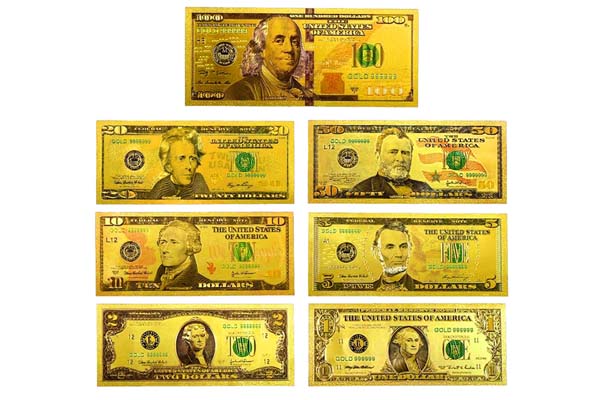

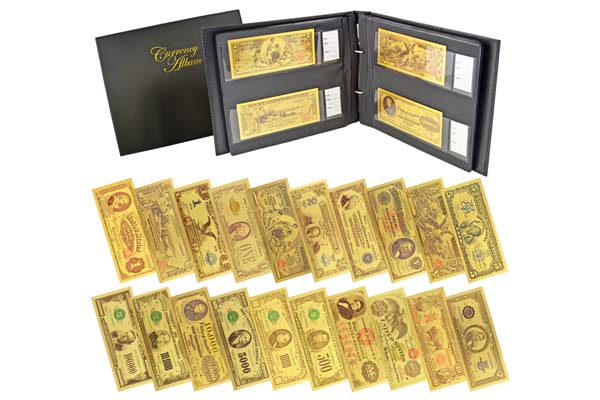
Gold-plated dollar bills are often seen as valuable keepsakes, but their actual worth is usually far less than people assume. Despite their eye-catching appearance, the materials used and the production process are relatively inexpensive.
A typical gold-plated dollar costs between $0.30 and $0.90 to produce and usually resells for just a few dollars. Higher values are tied to licensing rights, design exclusivity, and craftsmanship—not the gold content.
The thin layer of gold used in these bills is primarily for visual effect and has negligible intrinsic value. While the cost of materials and plating remains low, the value of certain gold-plated notes increases when they are tied to notable events, high-end brands, or licensed designs.
For example, a mass-produced souvenir bill, often sold on television or at tourist shops, is created for pennies and carries little to no collector value. In contrast, limited-edition gold banknotes1 made for events like a major Hollywood film premiere may carry significantly more worth due to official branding, numbered editions, and exclusive distribution. Similarly, gold-plated notes created for private banks or high-net-worth clients may be highly valuable because of their design precision, thick gold plating, and restricted availability.
What Affects the Price of a Gold Plated Dollar Bill?
While the base production cost is low, the final value of a premium note can be much higher depending on several contributing factors.
Key pricing drivers include: materials used, gold plating thickness, design complexity, security features, and order volume. These define whether a bill is a novelty or a true collectible.

Facilities with ISO 9001 certification often manage the entire production process—from digital modeling to packaging—ensuring consistency and quality. Each element in the process affects the final price.
Base Materials & Plating Specifications
The materials used determine the bill’s durability and aesthetic quality.
- 비금속: Quality materials such as brass, ultra-thin zinc alloy, or stainless steel give the bill a solid weight and a longer lifespan. Some clients request recycled metals to meet environmental standards.
- Plating Thickness: The thickness of gold plating significantly affects cost. Souvenir bills typically have a plating layer thinner than 0.1 microns, meant only for appearance. High-end versions may feature 24K gold plating at 3 microns or more, offering a deeper shine and longer-lasting finish. Thicker plating also allows for guarantees against tarnishing.
Customization and Design Complexity
The design phase adds to the production cost based on its complexity and uniqueness.
- Mold Creation: Custom molds are required for unique designs and involve a one-time setup fee. Minimum order quantities (MOQs) help distribute this cost across units.
- 인쇄 & Engraving: Advanced technologies like high-resolution UV printing and micro-engraving2 make it possible to capture intricate designs and color gradients. These are key for clients with branding needs or intellectual property (IP) requirements.
- IP Security: Secure production environments ensure that designs tied to licensed properties are not leaked or replicated. Full in-house production and NDAs help protect proprietary content.
Order Quantity and Security Features
Manufacturing volume and anti-counterfeiting measures3 play a role in determining both pricing and perceived value.
- Minimum Order Quantity (MOQ): Smaller MOQs are possible when using existing molds, enabling entrepreneurs and small businesses to test the market affordably.
- Anti-Counterfeiting: High-value notes often include advanced features like:
- Holographic overlays
- Unique laser-etched serial numbers
- Micro-text only visible under magnification
- Blockchain-linked Certificates of Authenticity4 (COA)
These features contribute to a collectible’s legitimacy and protect against unauthorized reproductions.
| 특징 | Souvenir-Grade Bill (Base Cost: ~$0.50) | Collector-Grade Custom Bill (Base Cost: ~$0.90+) |
|---|---|---|
| 도금 | Flash-plated or “gold tone” | 24K Gold (1–3 microns thick) |
| 설계 | Generic, mass-produced | Custom mold, micro-engraving |
| 인쇄 | Basic, prone to wear | High-res, UV printing with fade resistance |
| 보안 | 없음 | Holograms, serial numbers, COA |
| IP | Unlicensed | Officially licensed and protected |
| 포장 | Basic sleeve | Collector box with custom inserts |
Companies specializing in collectible-grade metal notes transform low-cost materials into high-value, limited-edition items. By combining secure production, advanced finishes, and licensed content, these items become more than novelties—they become curated collectibles.
결론
Gold-plated dollar bills have low production costs, and their monetary worth doesn't come from the gold itself. Instead, value is created through licensing, craftsmanship, exclusivity, and design. While mass-market versions are inexpensive souvenirs, limited-run custom notes can hold significant collector value.
-
Find out why limited-edition gold banknotes are highly sought after and what makes them valuable. ↩
-
Understand how micro-engraving adds intricate details and security features to collectible currency. ↩
-
Explore the advanced anti-counterfeiting measures that protect the integrity of collectible currency. ↩
-
Explore the importance of Certificates of Authenticity in verifying the legitimacy of collectible items. ↩