

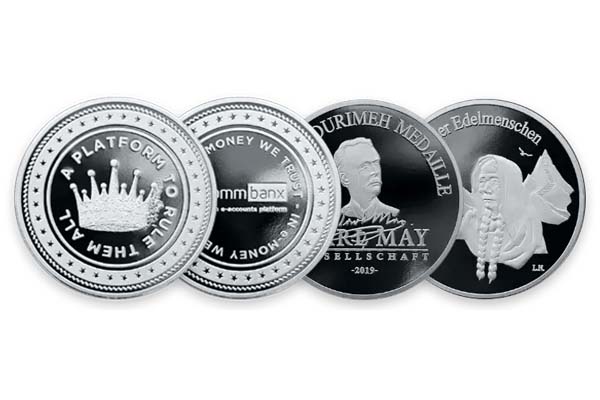
Struggling with silver jargon like "coin silver" versus "sterling"? You might be confused about value or quality. Let's clear up exactly what coin silver is, so you know what you're looking at.
Muntzilver is een metaallegering die gewoonlijk 90% puur zilver en 10% koper bevat. Historisch gezien betekende de term zilveren voorwerpen die feitelijk waren gemaakt van omgesmolten zilveren munten, die in zuiverheid varieerden maar vaak rond de 90% schommelden.
That 90% silver, 10% copper mix became particularly well-known because it was the standard for United States dimes, quarters, and half dollars issued before 1965. Adding copper wasn't just about cost; it made the coins much harder and more durable for everyday circulation. Pure silver, being very soft, wouldn't hold up well to constant handling. Understanding this difference is key, because the term "coin silver" vertelt je iets specifieks over de samenstelling van het metaal, anders dan andere soorten zoals sterling zilver of puur ongemunt zilver. Het overbrugt de kloof tussen hoge zuiverheid en praktische bruikbaarheid.
Let's dive a bit deeper into this. The history is quite practical. Imagine being a silversmith centuries ago. Access to standardized bars of refined silver wasn't always easy or affordable. However, silver coins from various countries were circulating widely. Think of Spanish silver dollars (pieces of eight) or other common currencies. These were a ready source of silver. A silversmith could melt down these coins to get the raw material needed to craft spoons, bowls, teapots, or jewelry. The final purity of the object depended entirely on the purity of the coins used, which could vary quite a bit.
Then, especially in North America, the term "coin silver" werd meer gestandaardiseerd, specifiek verwijzend naar die 90% zilver, 10% koperlegering (vaak aangeduid als 900/1000 fijnheid). Dit viel samen met de legering die lange tijd voor officiële Amerikaanse munten werd gebruikt. Dus als u een Amerikaanse zilveren munt van vóór 1965 hanteert, houdt u een voorbeeld vast van deze standaard zilveren muntsamenstelling.
Hoe verhoudt dit zich tot andere zilversoorten die je tegenkomt?
- Sterling zilver: This is the most common standard for quality silver jewelry and tableware today, especially in the US and UK. It's defined as 92.5% pure silver, usually mixed with 7.5% copper. You'll see it marked "Sterling," "STER," or "925." Het is iets zuiverder dan typisch muntzilver.
- Fijn zilver: This is as close to pure silver as you can commercially get, typically 99.9% pure (marked "999," ".999," or "Fine Silver"). It's very soft and primarily used for investment bullion (bars and rounds) or in specialized crafts where hardness isn't the main concern.
- Silver Plated: This isn't solid silver at all. It's a thin layer of silver electroplated onto a base metal core (like brass, nickel, or copper). It looks like silver but has very little intrinsic silver value. Marks might include "EP," "EPNS," or simply the manufacturer's name.
One challenge with older items potentially made from melted coins is the marking. While modern pieces meeting the 900 standard might be marked "Coin" or "900," historical pieces might lack any purity mark. Sometimes they only bear the maker's mark. This makes identification based solely on markings tricky for antiques.
Hier is een snelle vergelijking:
| Functie | Coin Silver (900) | Sterling Silver (925) | Fine Silver (999) | Silver Plated |
|---|---|---|---|---|
| Silver % | 90,0% | 92,5% | 99.9%+ | Minimal Layer |
| Other Metal | 10% (Usually Copper) | 7.5% (Usually Copper) | <0.1% | Base Metal Core |
| Duurzaamheid | Goed | Very Good | Lower (Softer) | Depends on Base Metal |
| Waarde | Good (Based on Silver + Age) | Higher (Based on Silver + Age) | Highest (Melt Value) | Laag |
| Common Marks | Coin, 900, Standard (Older: ?) | Sterling, STER, 925 | 999, Fine Silver | EP, EPNS, A1, etc. |
Het begrijpen van deze verschillen is van cruciaal belang, of u nu een verzamelaar bent die een antieke vondst beoordeelt of, zoals onze klant Mark Chen in Frankrijk, toeristische munten inkoopt: u moet ervoor zorgen dat u de kwaliteit en waarde krijgt die u verwacht. Een verkeerd begrip van termen kan tot kostbare fouten leiden.
Hoe kunt u zilveren munten identificeren?
Okay, you know what coin silver is supposed to be. But how do you spot it in the real world, especially with older or unmarked pieces? Let's look at practical ways.
Check for markings like "Coin," "Pure Coin," "Standard," or "900." On older pieces without marks, consider characteristics like tarnish patterns and heft. For certainty, non-destructive XRF testing or (carefully done) acid testing by professionals are the best options.

Voor het identificeren van muntzilver, vooral antieke stukken, moet je vaak naar meerdere aanwijzingen kijken. Als iemand die dagelijks met metaalspecifieke zaken te maken heeft, zoals het garanderen van de traceerbaarheid van materialen voor klanten als Sarah Johnson uit de Amerikaanse defensiesector, is nauwkeurigheid van cruciaal belang. Zo kun je het aanpakken:
Onderzoek markeringen en kenmerken
Dit is altijd de eerste stap. Kijk zorgvuldig over het hele stuk, vooral op de achterkant, onderkant of binnenranden.
- Expliciete markeringen: Look for "Coin," "Pure Coin," "Dollar" (on some very old American pieces made from melted dollars), "Standard," or the number "900."
- Makersmerken: Older pieces might only have a maker's mark (initials, name, or symbol). While this doesn't guarantee coin silver, researching the maker and their working period can provide strong clues about the materials they typically used. Some silversmiths specialized in coin silver before sterling became dominant.
- Absence of Marks: Be cautious. While some genuine antique coin silver items lack purity marks, many unmarked metal items are simply silver-plated or made of other alloys like pewter.
| Mark Examples | Possible Meaning | Betrouwbaarheid |
|---|---|---|
| COIN / PURE COIN | Likely 90% silver | High (if genuine) |
| 900 | 90% silver fineness | High (if genuine) |
| STANDARD | Often indicated coin silver standard | Matig tot hoog |
| Maker's Mark Only | Requires research on the silversmith | Variabel |
| No Marks | Uncertain; needs further testing | Laag |
Beoordeel fysieke kenmerken (gebruik met voorzichtigheid)
These methods are less reliable but can offer hints:
- Aanslag: Both coin silver and sterling silver tarnish (oxidize), typically turning yellowish, then grey, black, or iridescent blue/purple over time. The pattern of tarnish can sometimes be indicative, but it's heavily influenced by environment and cleaning history. Silver plate can also tarnish, but if the plating wears through, you might see the yellowish or reddish base metal underneath.
- Weight and Heft: Solid silver items generally feel heavier than plated items of the same size. Coin silver (90% Ag) is slightly less dense than sterling (92.5% Ag) and significantly denser than base metals like copper or brass often used in plating. However, judging by feel requires experience.
- Sound (The "Ping" Test): Some claim silver alloys have a distinct resonance or "ping" when tapped. This is highly subjective, varies greatly with the object's shape and thickness, and is not a reliable indicator.
- Magneettest: Silver is not magnetic. If a magnet sticks strongly to the item, it's definitely not solid silver (though it could still be plated over a magnetic core like iron or nickel). However, many base metals used in plating (like brass or copper) are also non-magnetic, so this test only rules out sommige fakes.
Professionele testmethoden
When certainty is required, especially for valuable items or bulk purchases (like Klaus Wagner needing specific recycled alloys), professional testing is the way to go.
- Acid Testing: This involves applying small drops of specific acids to a tiny scratch made on an inconspicuous area of the item. The color change of the acid indicates the approximate silver purity.
- Voordelen: Relatively inexpensive.
- Nadelen: It's destructive (leaves a mark), requires skill to interpret correctly, and only tests the surface layer. Can be fooled by heavy plating. We generally avoid this on finished goods due to the damage.
- X-Ray Fluorescence (XRF) Analysis: This uses a handheld device (XRF gun) to analyze the elemental composition of the metal without causing any damage.
- Voordelen: Non-destructive, highly accurate, provides exact percentages of silver and other alloys. This is the method we use at INIMAKER® for quality control, like verifying gold plating thickness meets standards like ASTM B-488.
- Nadelen: Requires expensive equipment, typically done by jewelers, pawn shops, appraisers, or testing labs.
For most buyers and collectors, combining visual inspection of marks with research on the maker or pattern is the most accessible approach. If you suspect high value, investing in professional XRF testing is often worthwhile.
Is muntzilver waardevol in vergelijking met andere zilversoorten?
You've identified an item as likely coin silver. Now, the big question: what's it actually worth? Is it a hidden treasure or just an interesting old piece?
Coin silver's value depends heavily on two factors: its intrinsic silver content (melt value based on weight and 90% purity) and its collector value (age, rarity, maker, condition, historical significance). Often, the collector value far exceeds the melt value.
The value equation for coin silver isn't always straightforward. Unlike simple bullion where value is almost entirely tied to the spot price of the metal, coin silver items often have layers of value. This is something clients like Aisha Al-Farsi, dealing with luxury commemorative coins, understand well – perceived value matters.
Berekening van de intrinsieke smeltwaarde
This is the baseline value, representing the worth of the pure silver contained within the item if it were melted down.
- How to Calculate:
- Weigh the item accurately (grams or troy ounces; 1 troy ounce ≈ 31.1 grams).
- Multiply the total weight by the purity (0.90 for 90% coin silver). This gives you the weight of the fine silver content.
- Multiply the fine silver weight by the current spot price of silver. (Make sure your weight units match the spot price units – usually troy ounces).
- Voorbeeld: A coin silver spoon weighs 50 grams.
- Fine silver content = 50 grams * 0.90 = 45 grams.
- Convert to troy ounces: 45 grams / 31.1 ≈ 1.45 troy ounces.
- If the silver spot price is $25 per troy ounce, the melt value ≈ 1.45 * $25 = $36.25.
- Keep in Mind: This is a raw value. A dealer buying for melt will offer less to cover their refining costs and profit margin.
Het beoordelen van de verzamelwaarde (numismatisch of antiek).
This is where things get more complex and potentially much more valuable.
- Age and Rarity: Older pieces, especially from before mass production, are often rarer and more sought after. Items from short production runs or specific historical periods command premiums.
- Maker or Manufacturer: Pieces made by renowned silversmiths (e.g., Paul Revere, Tiffany & Co. in certain periods) carry significant value beyond their silver content. Researching the maker's mark is crucial.
- Voorwaarde: Scratches, dents, broken parts, excessive polishing (which can erase details), or poor repairs significantly decrease collector value. Original patina (natural tarnish) is often preferred by collectors over a harshly cleaned item.
- Provenance: Documented history of ownership, especially if linked to important people or events, can dramatically increase value. Think of Diego Martinez needing proof of rights for athlete likenesses; provenance is similar for antiques.
- Artistic Merit or Design: Unique, aesthetically pleasing, or historically significant designs are more valuable than common, plain items.
- Vraag: Market trends influence value. Certain styles or types of items might be more popular at different times.
Muntzilver versus sterling zilver versus fijn zilver in waarde
- Melt Value: Ounce for ounce, fine silver (99.9%) has the highest melt value, followed by sterling (92.5%), then coin silver (90%).
- Verzamelwaarde: This often overrides melt value. A rare coin silver spoon from the 18th century could be worth thousands, while a modern sterling silver spoon might only be worth its melt value. Similarly, a common date pre-1965 US coin silver dime might be worth only slightly above melt, while a rare date/mint mark version could be highly valuable to numismatists.
- Investering: Fine silver bullion is typically preferred for pure silver investment due to its standard purity and easy liquidity. Coin silver and sterling items are more of a hybrid collectible/precious metal investment.
In essence, always assess coin silver items for potential collector value before considering only their melt value.
Wat is het belangrijkste verschil tussen muntzilver en sterling zilver?
One of the most common points of confusion is the difference between coin silver and sterling silver. They sound similar and look alike, but there's a crucial distinction.
The primary difference lies in silver purity: Sterling silver is legally defined as 92.5% pure silver mixed with 7.5% other metals (usually copper), marked "925" or "Sterling." Coin silver typically contains 90% pure silver and 10% copper, often marked "900" or "Coin."
Understanding this difference is fundamental, whether you're buying antique silverware or commissioning new items. For instance, when we produce high-end plated challenge coins, specifying the plating standard is critical, just as knowing the base alloy standard (like sterling vs. coin) matters for solid items.
Zuiverheidsnormen uitgelegd
The numbers tell the story:
- Sterling (925): This standard was established in England centuries ago and became the dominant benchmark for quality silverware and jewelry in many Western countries. The 7.5% added copper provides hardness and durability while maintaining a high level of silver brilliance and tarnish resistance (though it still does tarnish).
- Coin (900): As discussed, this standard often arose from practicality (using available coins) or specific national minting standards (like the historical US standard). The slightly higher copper content (10%) makes it marginally harder than sterling but potentially more prone to tarnishing, though this also depends on other trace elements and environmental factors.
Here’s that comparison again, focused on these two:
| Functie | Coin Silver (Typical) | Sterling zilver |
|---|---|---|
| Zilveren zuiverheid | 90,0% | 92,5% |
| Alloying Metal | 10% (Usually Copper) | 7.5% (Usually Copper) |
| Common Marks | 900, Coin, Standard | 925, Sterling, STER |
| Oorsprong | Often Historical US/Other | English origin, Int'l Std |
| Hardheid | Slightly Harder | Slightly Softer |
| Tarnish Rate | Potentially Faster | Generally Slower |
| Melt Value/Oz | Slightly Lower | Slightly Higher |
Waarom is het verschil belangrijk?
- Legal Standard: In many countries, an item must be 92.5% silver to be legally sold as "Sterling." Selling something less pure under that label is fraudulent. "Coin Silver" is more descriptive and less legally defined globally, often relying on the 900 mark or historical context.
- Waarde: Sterling has a slightly higher intrinsic silver value per unit of weight. However, as mentioned before, antique or numismatic value often dwarfs this small difference.
- Durability vs. Workability: The minor difference in copper content affects hardness and malleability slightly. Silversmiths might choose one over the other depending on the item being made and the techniques used, though both are workable.
- Consumer Expectation: Especially for modern items, consumers often expect "Sterling" as the mark of quality solid silver tableware or jewelry. "Coin Silver" is more associated with historical pieces or specific types of collectibles like pre-1965 US coins.
Knowing these distinctions helps you accurately describe items, understand their value, and meet specific requirements, like clients needing MIL-SPEC compliance or adherence to historical replication standards.
Looking for Quality Silver-Plated Replicas or Custom Coins?
Understanding different silver types like coin silver is fascinating for history buffs, educators, and collectors. Maybe exploring this has sparked an idea? Perhaps you need high-quality replicas for a museum display, durable teaching aids for a history class illustrating different types of currency, or simply beautiful, custom-designed collector's coins that capture the Look En gevoel of historical silver without the high cost and softness of solid precious metal.
That's where we at INIMAKER® excel. With over 12 years specializing in custom metal crafting, we understand the nuances of creating premium items. We use durable base metals like zinc alloy or brass and apply expert gold or silver electroplating. Our advanced techniques, including ISO 9001-certified processes and optional anti-oxidation coatings, ensure a brilliant, detailed, and long-lasting finish that does justice to your design. Whether you need the gleam of fine silver or the warm hue of gold, our plating meets high standards (like REACH, RoHS, and even ASTM B-488 for gold). We can replicate textures, details, and even offer antique finishes to give your pieces historical authenticity. If you need beautifully crafted, custom-plated coins or medals for educational purposes, enthusiast collections, or corporate recognition, let's talk. We offer flexible MOQs (from 100 pieces) and full design-to-delivery service.
Contact us at info@inimaker.com to discuss your project!
Conclusion: Understanding Coin Silver
In short, coin silver verwijst doorgaans naar een 90% zilverlegering, anders dan 92,5% sterling zilver. Als u de historische context, herkenningstekens en waardefactoren ervan begrijpt, krijgt u meer kracht, of u nu antiek verzamelt, met historisch geld omgaat of gewoon metaalvakmanschap waardeert.