

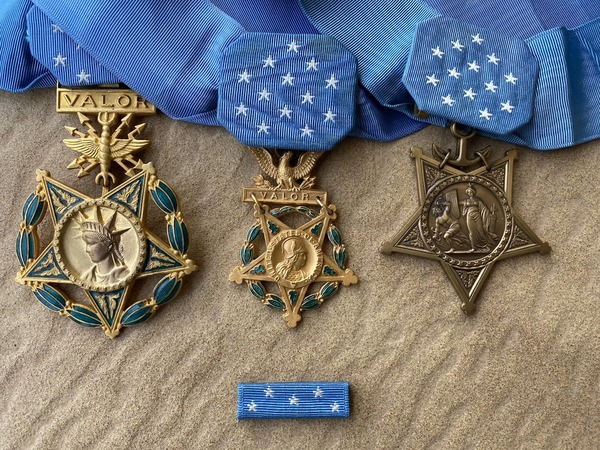
Você já olhou atentamente para a Medalha de Honra e se perguntou sobre seu design? Muitas pessoas perguntam sobre sua estrela. É um símbolo de bravura incrível, por isso cada detalhe é importante.
Na verdade, a estrela da Medalha de Honra não está de cabeça para baixo. Suas cinco pontas são dispostas intencionalmente com uma ponta voltada para cima, que é uma orientação tradicional para estrelas que simbolizam honra e conquista.
A própria estrela é uma parte fundamental do rico simbolismo da medalha. Esta orientação específica é comum na heráldica e nas insígnias militares para representar aspirações e ideais elevados. Todo o desenho, desde a estrela às figuras e guirlandas, conta uma história de valor e sacrifício. Exploraremos o que cada elemento significa.
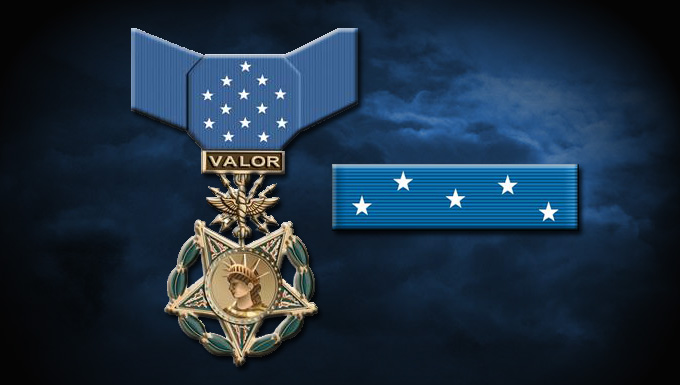
O design apresenta um estrela de cinco pontas1, e para as versões do Exército e da Força Aérea, é cercado por um verde coroa de louros2. At the center of the star is the head of Minerva, the Roman goddess of wisdom and righteous war. The word "VALOR" está inscrito em uma barra acima da estrela, que está suspensa por uma fita de seda azul estampada com treze estrelas brancas, representando as treze colônias originais. A versão Navy tem suspensão um pouco diferente, utilizando âncora. A escolha de Minerva3 não foi acidental; ela representa os aspectos estratégicos e nobres da guerra, não apenas a força bruta. A coroa de louros é há muito tempo um símbolo de vitória e honra. Portanto, a estrela apontando para cima se ajusta perfeitamente a esses temas de grandes realizações e aspirações. É um design cheio de significado.
What is the Symbolism Behind the Medal of Honor's Design?
So, we know the star isn't upside down. But what do all the other parts mean? Let's look closer.
The Medal of Honor's design is packed with symbols: the five-pointed star for valor, Minerva for wisdom in war, oak leaves (Army/Air Force) or laurel (original Navy) for strength and victory, and an eagle or anchor connecting it to the specific branch.
Each element was chosen very carefully. It's not just a pretty piece of metal; it's a story.
Unpacking the Symbols
Let's break down the main components you'll find on the Medals of Honor. Small variations exist between the Army, Navy, and Air Force versions, but core symbols are often shared or have similar meanings.
-
The Five-Pointed Star:
As mentioned, this is a classic symbol. One point is upwards. It generally represents the high ideals, achievements, and guiding principles of the recipient. Each point can also be seen to represent a virtue. -
Minerva (Army & Air Force):
The Roman goddess Minerva embodies wisdom, courage, strategy, and just warfare. Her inclusion highlights that the medal recognizes not just raw courage, but also the intelligence and strategic thought that can accompany acts of valor. -
Laurel Wreath / Oak Leaves:
- Laurel Wreath (Original Navy & general symbolism): Since ancient times, a laurel wreath has signified victory, honor, and achievement.
- Green Enamelled Oak Leaves (Army & Air Force): Oak leaves traditionally symbolize strength, endurance, and steadfastness. The green color adds a touch of life and vitality.
-
"VALOR" Inscription:
This is pretty direct. It clearly states the quality being recognized – courage in the face of danger. -
The Suspension Elements:
- Eagle (Army & Air Force): The American bald eagle is a prominent national symbol, representing freedom, strength, and the United States itself. In the Army version, it's perched on a bar. In the Air Force version, the eagle is more prominent in the overall design geometry.
- Anchor (Navy): The anchor is the traditional symbol of naval service, representing steadfastness and maritime tradition.
-
A fita:
The light blue color of the ribbon, with its thirteen white stars (representing the original colonies), is also significant. Blue often represents vigilance, perseverance, and justice.
Here's a quick comparison of key symbolic elements for the primary versions:
| Recurso | Army Version | Navy Version | Air Force Version |
|---|---|---|---|
| Central Figure | Minerva | Minerva (fighting Discord) | Statue of Liberty |
| Wreath | Green Enamelled Oak Leaves | Laurel (around Minerva) & Oak | Laurel Wreath |
| Suspension | Eagle on bar "VALOR" | Anchor | Águia & "VALOR" bar, thunderbolts |
| Star Points Up | Sim | Sim | Sim |
| Fita | Light Blue, 13 White Stars | Light Blue, 13 White Stars | Light Blue, 13 White Stars |
Understanding these symbols helps us appreciate the depth of meaning behind the Medal of Honor. It's more than an award; it's a testament to specific virtues.
How Has the Medal of Honor Design Evolved Over Time?
Did the medal always look this way? Like many things with a long history, it has changed.
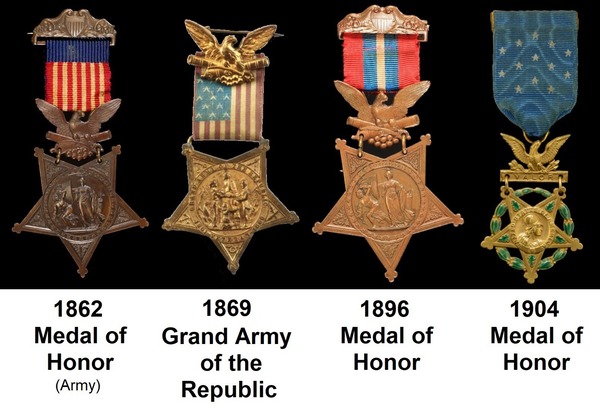
The Medal of Honor design has evolved since its creation in 1861 (Navy) and 1862 (Army). While the five-pointed star has remained, suspension methods, central figures, and ribbon designs have seen updates, including a distinct Air Force version introduced in 1965.
The core idea of a star has been pretty consistent, but the details show a journey.
A Timeline of Changes
The Medal of Honor's journey reflects the changing nature of warfare and the distinct identities of the military branches.
-
1861: The Navy Medal of Valor
- This was the first version authorized. It featured a five-pointed star. Inside an encircling ring of 34 stars (for the states at the time), Minerva was depicted standing, with a shield in one hand and fasces in the other, repulsing Discord.
- It was suspended by an anchor from a ribbon resembling the American flag.
-
1862: The Army Medal of Honor
- Authorized shortly after the Navy's. This design, created by Anthony C. Paquet of the U.S. Mint, is closer to the modern Army version.
- It featured the five-pointed star with trefoils on each point, surrounding Minerva's head, all within a green enamel laurel wreath.
- Suspended by an eagle on a cannon, attached to a ribbon similar to the Navy's original flag-like ribbon.
- The ribbon was changed in 1896 to a red, white, and blue pattern, and then in 1904 to the light blue with white stars we know today. This 1904 design by Major General George Gillespie also changed the suspension.
-
1904: The "Gillespie Medal" (Army)
- A significant redesign for the Army. This version is the basis for the modern Army medal. It solidified the light blue silk ribbon with thirteen white stars.
- The planchet (the medal itself) was redesigned by the firm of Tiffany & Company. This is when the bar inscribed "VALOR" was introduced.
-
1913-1919: The "Tiffany Cross" (Navy)
- The Navy also sought a redesign. Tiffany & Company created a cross pattée design for the Navy. This was controversial. Many recipients preferred the traditional star.
- From 1919 until 1942, Navy recipients could choose between the Tiffany Cross and the original 1861 star design. In 1942, the Tiffany Cross was discontinued, and the Navy reverted to a modified version of its original star design.
-
1965: The Air Force Medal of Honor
- The Air Force, established as a separate branch in 1947, initially used the Army version.
- In 1965, a unique design for the Air Force was approved. It's larger than the Army or Navy versions. It features an annulet of laurel surrounding a five-pointed star, with Minerva's head at the center. The star is surmounted by the U.S. Air Force coat of arms service crest (an eagle with thunderbolts).
Key Changes Summarized:
| Year(s) | Branch | Significant Change |
|---|---|---|
| 1861 | Navy | Original design established. |
| 1862 | Army | Original design established. |
| 1896 | Army | Ribbon changed to red, white, and blue. |
| 1904 | Army | "Gillespie Medal": Light blue ribbon, "VALOR" bar, new planchet. |
| 1913 | Navy | "Tiffany Cross" introduced as an alternative. |
| 1942 | Navy | Tiffany Cross discontinued; reverted to a modified original star. |
| 1965 | Air Force | Distinct Air Force version created. |
These changes show how the medal has adapted while keeping its core identity.
Who is Eligible to Receive the Medal of Honor?
This isn't a medal that's handed out easily. So, who can actually earn it?
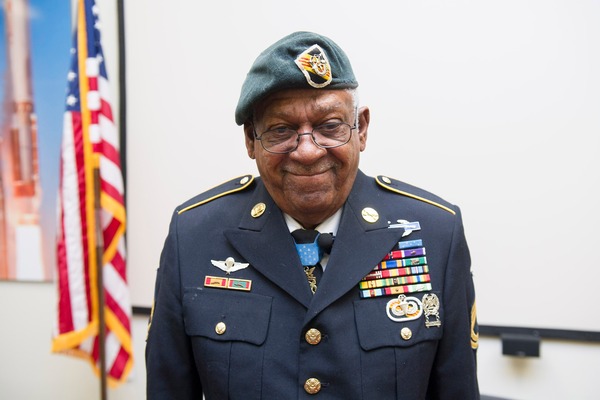
Any member of the United States Armed Forces, regardless of rank, is eligible. The Medal of Honor is awarded for conspicuous gallantry and intrepidity at the risk of life above and beyond the call of duty.
It's about extraordinary actions, not just doing your job well.
The Path to a Medal of Honor
The criteria are extremely strict, and the act must be truly exceptional.
-
The Core Criteria:
- Conspicuous Gallantry and Intrepidity: The act must be clearly heroic and brave.
- At the Risk of Life: The individual must have faced a high probability of death.
- Above and Beyond the Call of Duty: The action must be far outside what is normally expected in their role.
- In Action Against an Enemy of the United States: Or while engaged in military operations involving conflict with an opposing foreign force, or while serving with friendly foreign forces engaged in an armed conflict against an opposing armed force in which the United States is not a belligerent party.
-
Evidence:
The act must be proven by incontestable evidence from at least two eyewitnesses (if possible). It cannot be based on hearsay. -
The Nomination Process:
Usually, a recommendation is initiated within the service member's chain of command. It goes through many levels of review, all the way up to the Secretary of the respective military branch, the Secretary of Defense, and finally, the President of the United States. The President typically presents the medal in the name of Congress. -
Time Limits:
Generally, the recommendation must be made within three years of the heroic act, and the medal awarded within five years. However, Congress can waive these time limits, which has happened for many historical awards, especially from World War I, World War II, Korea, and Vietnam, where acts of valor were later recognized. -
Posthumous Awards:
Sadly, many Medals of Honor are awarded posthumously if the service member died performing the heroic act or from wounds sustained during it. -
One Award:
A service member can only receive one Medal of Honor in their lifetime. However, 19 individuals have received two Medals of Honor for separate acts of valor. Regulations later changed to prevent multiple awards of the same medal, though a person could still receive the Medal of Honor and other high valor awards for different actions.
It's a very high bar, reserved for the most courageous actions. This ensures the medal maintains its status as the nation's highest award for military valor.
Crafting Your Own Symbols of Honor and Learning
The Medal of Honor is a unique and revered military decoration. But the idea of using medals to commemorate achievements, history, or even for educational purposes is something many organizations and enthusiasts do. As a company that has been crafting high-quality custom metal pieces for over 12 years, we at INIMAKER® understand the power of a well-made medal.
Talvez você seja um museu em busca de réplicas historicamente precisas para uma exposição. Ou talvez um educador que precise de materiais didáticos detalhados para explicar símbolos como os da Medalha de Honra. Ou você pode ser um colecionador interessado em peças comemorativas específicas. Podemos criar lindas moedas e medalhas folheadas a ouro ou prata. Nossa equipe pode ajudar com o design 3D, garantindo que cada detalhe seja capturado. Usamos materiais como liga de zinco, latão e ferro, e podemos aplicar vários acabamentos, incluindo looks antigos, para obter a sensação certa para o seu projeto. Para ensinar ou colecionar, essas peças detalhadas podem tornar a história e o simbolismo muito mais tangíveis.
Conclusão
A estrela da Medalha de Honra aponta orgulhosamente para cima, um farol de valor. Todo o seu design conta uma história profunda de coragem, sabedoria e sacrifício pela nação.
-
Explore o significado da estrela de cinco pontas no design da Medalha de Honra, representando valor e ideais elevados. ↩
-
Aprenda sobre o significado histórico da coroa de louros como símbolo de vitória e honra em contextos militares. ↩
-
Descubra como Minerva incorpora sabedoria e estratégia no contexto do valor militar, enriquecendo o significado da medalha. ↩