

The challenge coin creation process involves several steps, from crafting a custom mold to final quality inspection. Here’s an overview:
- Создание пользовательской формы: Transfer the customer’s design into a metal mold that will imprint the coin.
- Stamping the Coin: Press the mold onto a metal blank to form raised designs and text.
- Trimming Edges: Cut the coin edges precisely to achieve a smooth, custom shape.
- Polishing and Deburring: Remove burrs and refine the surface to enhance smoothness and shine.
- Гальванизация: Add a protective metal layer, available in finishes like gold, silver, antique bronze, or black nickel.
- Цветовая заливка: Apply enamel colors matched to Pantone codes, then bake for durability.
- Лазерная гравировка: Engrave personalized details, such as text or serial numbers, on the coin’s surface or edge.
- Контроль качества: Inspect each coin for appearance, color uniformity, and finishing quality before packaging.
This step-by-step process ensures each custom challenge coin meets high standards for detail, durability, and design.
Creating the Custom Coin Mold
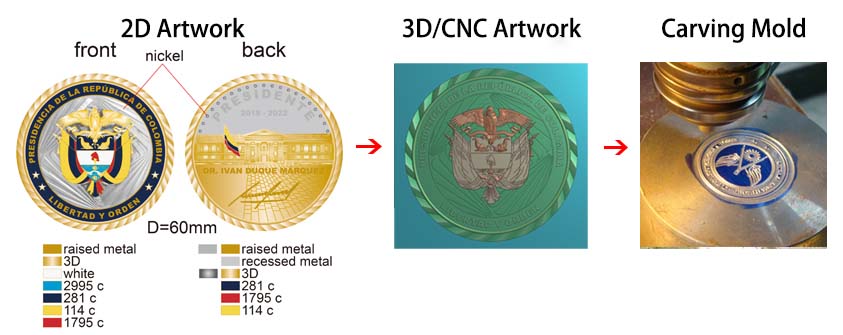
The first step in crafting a challenge coin is designing and creating a custom mold. This process involves transferring the customer’s artwork into a metal mold, which will be used in later steps to stamp the design onto metal.
First, our design team creates a 2D drawing and confirms it with the customer. Once the 2D drawing is approved, the team converts the patterns, text, and logos into 3D design files that capture the depth and raised areas of the artwork, ensuring the final coin will have the desired look and feel. After verifying that the 3D design files match the 2D drawing, these 3D design files are transferred to the CNC engraving machine. The CNC machine then precisely carves every detail onto the metal mold.
To ensure precision, we create separate molds for the front and back of the coin. Once the CNC machine finishes engraving, we test the molds by striking soft metal blanks and examining the impressions they leave. If any imperfections are found, we can make adjustments at this stage.
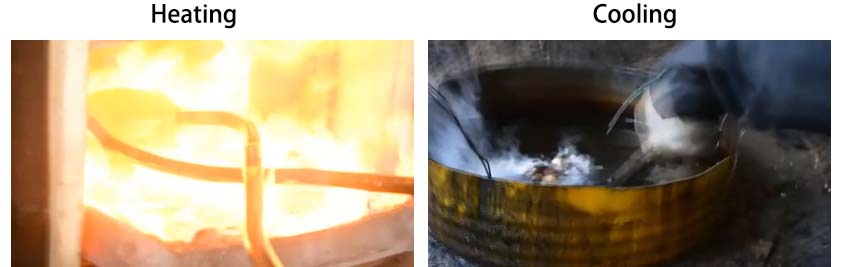
Once we’re satisfied with the molds, we heat-treat them in a high-temperature oven, hardening the steel so it can withstand the intense pressure of stamping. When the molds are red-hot, we remove them from the oven and douse them in cool oil. It takes anywhere from 500 to 1,000 tons of force to stamp a brass coin, and heat-treating the molds beforehand ensures they are ready to handle the task.
The quality of the mold is critical, as it directly affects the clarity and accuracy of every detail on the coin. This precise mold-making process ensures each design element is clearly replicated on the final coin.
Stamping the Coin
The stamping process, also known as die striking, uses custom-made coin molds (sometimes called dies) to press the design into the metal. While this sounds straightforward, the approach can vary based on the shape and type of coin being created.

For round coins, мы обычно начинаем с заготовок для монет. Эти заготовки представляют собой простые круглые металлические диски, вырезанные из полос латуни или стали. Для их создания мы пропускаем латунные или стальные полосы через монетный пресс, оснащенный дисковым режущим инструментом. Пресс штампует круглые заготовки, которые затем откладываются для процесса штамповки. Когда все готово, заготовки монет помещаются между формами на пресс для монет высокого давления, который ударяет формы по заготовкам, чтобы отпечатать рельефный рисунок. Готовые монеты-вызовы обычно имеют диаметр от 1,5 до 2 дюймов, поэтому при создании заготовок мы придерживаемся этих стандартных размеров.
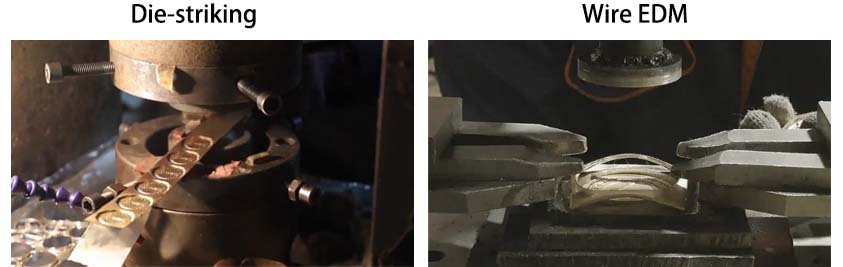
For монеты нестандартной формы, the die striking process is slightly different. Instead of cutting blanks first, we feed a continuous brass strip through the press and stamp multiple impressions of the design along its length. After stamping, we use a custom-shaped cutting tool to trim out each coin along its unique outline. These custom-shaped cutting tools are made with Wire EDM technology, which allows us to produce tools for anything from simple circles to the most intricate shapes.
Just like the coin molds, the cutting molds undergo trimming and heat treatment to ensure durability and precision. Once the cutting mold is prepared, it is loaded onto a special coin press. When this press comes down on the brass strip, it precisely cuts out each coin with the design impression already in place.
Trimming the Coin Edges
After stamping, the coin’s edges need precise trimming to achieve either a standard round shape or a custom shape specified by the customer.
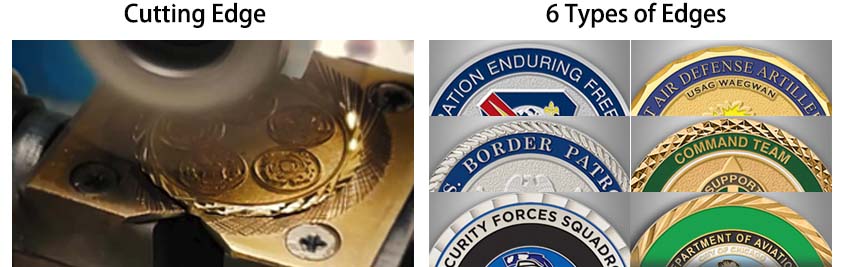
This step typically uses specialized cutting molds or punches to create smooth, even edges. Edge trimming not only impacts the coin’s appearance but also its feel, so precision is essential here.
Customers can also choose to add unique edge effects, like reeded or diamond-cut edges. These effects add texture and visual appeal, enhancing the overall quality of the coin.
Polishing and Deburring
After trimming, the coins may have tiny burrs or uneven textures on their edges or surfaces, which are removed by polishing.
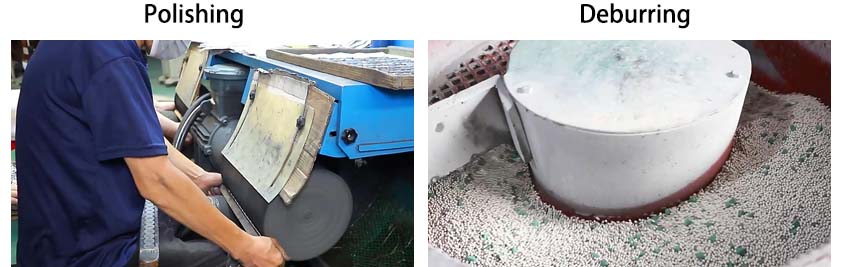
Polishing removes any burrs, making the edges and surfaces smoother and more refined while also enhancing the coin’s shine, adding to its overall aesthetic appeal. This step is typically done in a specialized polishing machine, using specific materials and tools to achieve the ideal level of smoothness and brightness.
Various polishing methods offer different finishes, from a high-gloss mirror effect to a soft matte look, and can be customized based on customer preference.
Гальванизация
After polishing, the challenge coins go through an electroplating process Это создает защитный слой на поверхности, улучшая внешний вид и долговечность монеты. Гальваника — это точный химический процесс, состоящий из нескольких этапов, обеспечивающий равномерное и долговечное покрытие.
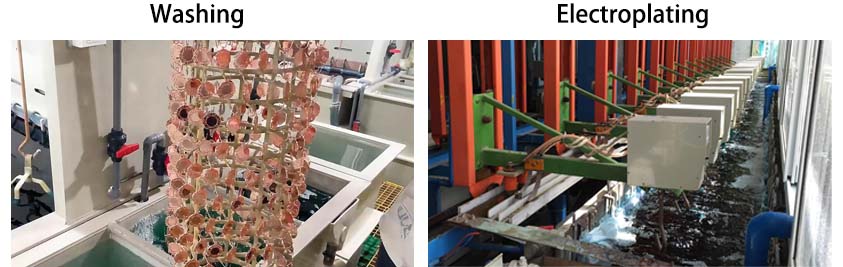
Сначала монеты подвешивают на медные проволоки и погружают в чистую воду, после чего обрабатывают различными химическими растворами для полной очистки поверхностей. Этот гарантирует, что монеты свободны от каких-либо примесей, что позволяет получить равномерное покрытие. После очистки монеты погружают в раствор, содержащий драгоценные металлы, такие как золото, серебро или медь, чтобы начать процесс покрытия.
Во время гальванизации через раствор проходит электрический ток, надежно связывая ионы металлов с поверхностью монеты. Популярные цвета гальваники включают золото, серебро, античную бронзу, черный никель и радужную отделку. В результате этого процесса на каждой монете создается тонкий, но прочный слой металла. Гальваника улучшает внешний вид монеты. внешняя привлекательность и обеспечивает устойчивость к коррозии и износу, продлевая срок службы монеты.
В зависимости от требований заказчика монетам может быть присвоена одноцветное покрытие, многослойное покрытиеили антиокислительное покрытие, чтобы сохранить их блестящий внешний вид с течением времени.
Цветовая заливка
Для монет-испытаний с цветным рисунком следующим шагом будет цветовая заливка. В этом процессе обычно используется эмалевая краска для заполнения углублений рисунка, что обеспечивает яркость и долговечность цветов. Цветное заполнение может выполняться вручную или с помощью машины, но для небольших заказов (около 200 монет) ручное заполнение обычно происходит быстрее и эффективнее.
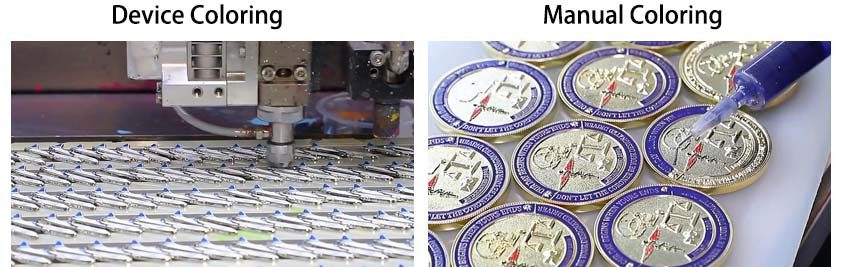
Профессиональные фабрики используют специальные инструменты, наполненные мягкая эмалевая краска чтобы точно заполнить углубления в каждом дизайне. Перед заливкой каждый цвет тщательно подбирается в соответствии с Цветовой код Pantone чтобы окончательный дизайн точно соответствовал оригиналу. После добавления всех цветов монеты помещают в печь для затвердевания. Этот процесс запекания укрепляет эмаль, обеспечивая ее надежное сцепление с поверхностью монеты и повышая ее долговечность.
Различия между мягкой эмалью и твердой эмалью:

For монеты из мягкой эмалиЦвета залиты в углублениях рисунка, разделенных рельефными металлическими линиями, что придает монете текстурированный и многослойный вид. Мягкая эмалевая краска располагается под металлической поверхностью, создавая ощущение объемности. Soft enamel coins are electroplated first and then color-filled, which means the enamel sits on top of the plated metal, making colors appear more vibrant.
In contrast, hard enamel coins follow a different sequence. Hard enamel colors are filled and cured before electroplating. After all colors are filled, the coin undergoes multiple polishing stages to level the enamel with the metal surface, creating a smooth, flush finish. Once the hard enamel is polished, the coin is electroplated, giving the metal and enamel a refined, glossy finish that feels high-end and luxurious.
Whether soft or hard enamel, color filling adds depth to multi-colored challenge coins, enhancing their visual appeal and making them truly stand out.
Лазерная гравировка
After electroplating and color filling are complete, laser engraving can be used to add personalized elements to the coin. Laser engraving allows for the addition of fine text, serial numbers, or other personalized information on the coin’s surface or edge. The high precision of laser engraving ensures that each letter and symbol is sharply detailed without compromising the overall design of the coin.
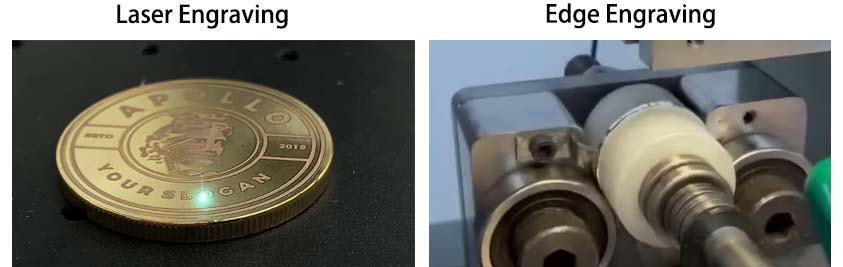
Laser engraving also enables the addition of small details that cannot be achieved through die-striking methods, enhancing the intricacy of the coin’s design. This step not only increases the coin’s uniqueness but also adds commemorative value, making each challenge coin a true reflection of the customer’s personalized requirements.
Контроль качества
Once all steps are completed, each challenge coin goes through strict quality control to ensure it meets high standards.

Quality checks include verifying the coin’s appearance, color uniformity, edge smoothness, and polishing quality, making sure every detail matches the customer’s design and expectations. Only coins that pass quality inspection are packaged and shipped.
Our rigorous quality control process guarantees that customers receive flawless coins that meet their expectations and maintain a consistent, high-quality finishПолем
Получите бесплатный вызов Дизайн монет сейчас